
Pilots at BAT
Climate tech companies need to prove their products work on actual buildings, roads, and systems—not just in labs.
Pilots at BAT provides climate tech companies with access to real-world infrastructure at the Brooklyn Army Terminal to validate and scale technologies in New York City's urban environment. Demonstrating performance under live conditions is critical for commercializing solutions in sectors like advanced building materials, renewable energy systems, and clean mobility. Pilots at BAT will continue to be the flagship initiative to activate BATWorks in anticipation of its full launch in 2028.
The program is operated by the Los Angeles Cleantech Incubator (LACI), which has deployed $25M in cleantech pilots over the past four years—from first commercial deployments to the nation's first zero-emissions delivery zone. LACI's unique, holistic model of startup incubation, piloting, and workforce development now supercharges New York City's climate tech ecosystem.
Sign up to be notified when applications reopen.

Testing Zones & Technologies
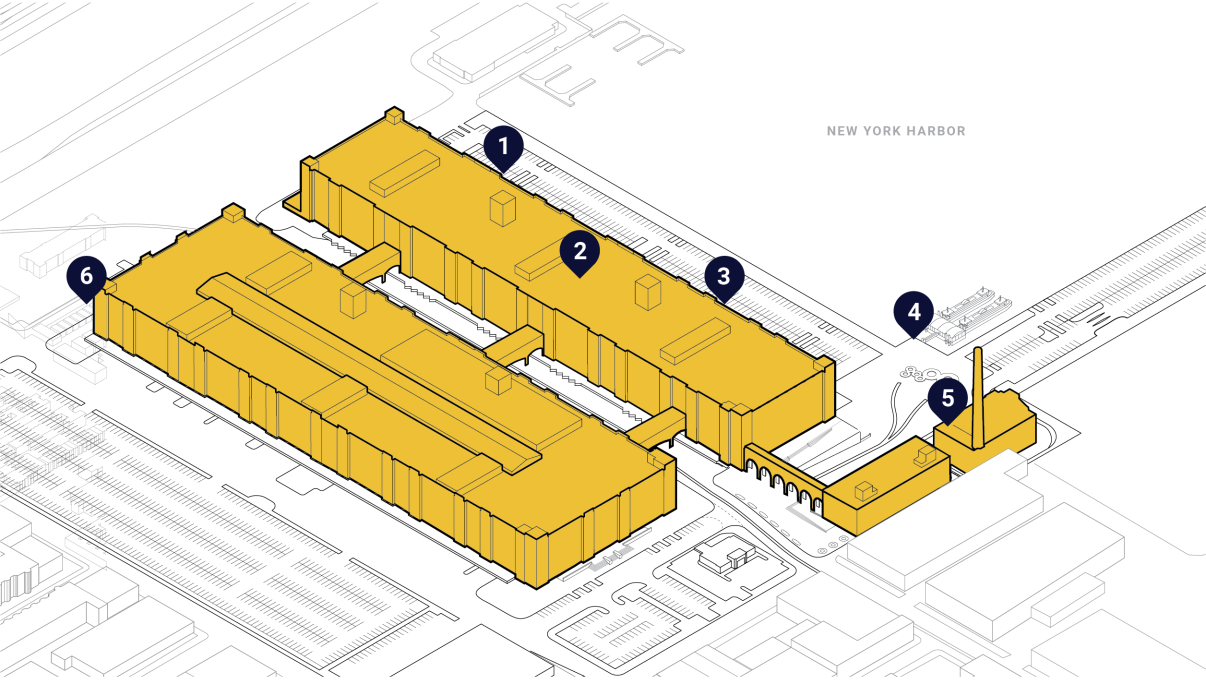
The 59-acre Brooklyn Army Terminal campus offers diverse infrastructure for real-world validation:
Plumbing and Water Systems
Test water management technologies and IoT integration across active industrial facilitiesInterior Walls and Facades
Test low and zero-carbon building materials, construction technology, and circular reuse approaches on both century-old and modern structuresParking Spaces and Electrical Connections
Deploy EV charging solutions and zero-emissions logistics infrastructure
Waterfront Access
Validate Blue Highways innovations, maritime decarbonization, water management systems, and waterfront conservation technologiesHeating Systems
Monitor smart heating and cooling systems, energy monitoring, and building management solutions
Roadways and Sidewalks
Pilot zero-emissions transportation for goods and people movement, piezoelectric harvesting technology, EV charging with V2B capabilities, autonomous vehicles, and smart lighting
Beyond infrastructure access, pilot companies receive:
Technical support for permitting, permissions, installation, and deinstallation
Hot desk access at BATWorks during your pilot deployment
Featured inclusion at BATWorks pilot showcases for corporates, government procurers, regulators, and investors
Published case study to advance your business objectives
Policy connections through annual thought leadership and agency memos identifying regulatory unlocks for your technology
Access to the ClimateTech Expertise Network (CEN)—over 100 certified entrepreneurs-in-residence, talent matching, and programmatic support
Automatic consideration for LACI's Incubation and Market Access programs in Los Angeles
Debt fund access for startups working with LACI incubator partners or enrolled in LACI programs
Program Support
Emerging climate tech companies piloting technologies looking for a catalytic opportunity to demonstrate their solution—from bio-based building materials to EV charging retrofits. Ten innovators join the program each year.
Requirements:
Cleantech solution addressing priority technology areas listed above
Novel proprietary technology (owned or licensed)
Minimum two full-time employees
Working prototype at TRL 4 or higher
Commitment to attend monthly pilot calls during the one-year program
Note: Corporations are eligible to apply as program sponsors at BATWorks, as are nonprofits applying with a climate company partner.
Who Should Apply
July 27 - August 28
Round 1 Application period
(1 month)
August 3
Info session
Add a link to register for the info session
Late August - Late September
Application Review & Clarification period
Late October
Cohort 11 selections
Cohort 11
Application Timeline
Frequently Asked Questions
-
Pilots at BAT involves a one-year services agreement with LACI. Pilots typically run for six months to one year.
-
Companies can be based anywhere but must demonstrate economic nexus in NYC during the program by: (1) establishing a mailing address at BATWorks, and (2) signing an agreement to either file General Corporation Tax (GCT) with the City of New York or Form NYC-245 indicating GCT exemption.
-
Approximately 10 innovators join the program each year.
-
Applications open mid-January 2026 and close February 24, 2026. A second application cycle opens later in 2026.
High-visibility deployment in a live environment
The Brooklyn Army Terminal operates as a working industrial campus with active logistics, occupied commercial spaces, and public access.
Why Pilot Here
Scale and diversity for comprehensive testing
Sixty acres spanning historic industrial buildings, activated public spaces, and working waterfront. Test building envelope solutions on century-old facades, deploy environmental sensors in active logistics zones, or pilot renewable energy systems on large rooftop surfaces.
Direct pathways to commercialization
Connection to both LACI and New York City Economic Development Corporation creates direct lines to government procurers, corporate buyers, and policy makers working to decarbonize city operations and infrastructure.
Proof point that opens markets
A successful pilot at BAT demonstrates your technology works in the complexity of real urban conditions—the proof investors, partners, and procurement officials need to move forward.
Testimonials
-
The pilot with NYCEDC accelerated our transition from prototype to commercial scale. Their strategic and operational support across every phase of the rollout was instrumental to our success.
— Baruch Herzfeld, Co-founder, Popwheels
Popwheels offers a convenient swappable battery system that lets e-bike riders exchange a depleted, UL-certified battery for a fully charged one at secure outdoor cabinets. This solution keeps riders moving, maximizes uptime, and powers a cleaner, more sustainable way to travel safely.
-
Cast Carbon is thrilled to collaborate with BAT in showcasing to the public that we can build a new 21st century using materials that reflect our values in addition to beauty and performance. Together we craft a future that treasures both human and nature's health, not just theoretically but materially.
— Emily Majewski, Founder, Cast Carbon
Cast Carbon offers biochar-enriched wall tiles that blend clays, minerals and agricultural waste into a compostable finish. The wall tiles are designed for modular installation and disassembly, storing carbon while elevating interior aesthetics.
-
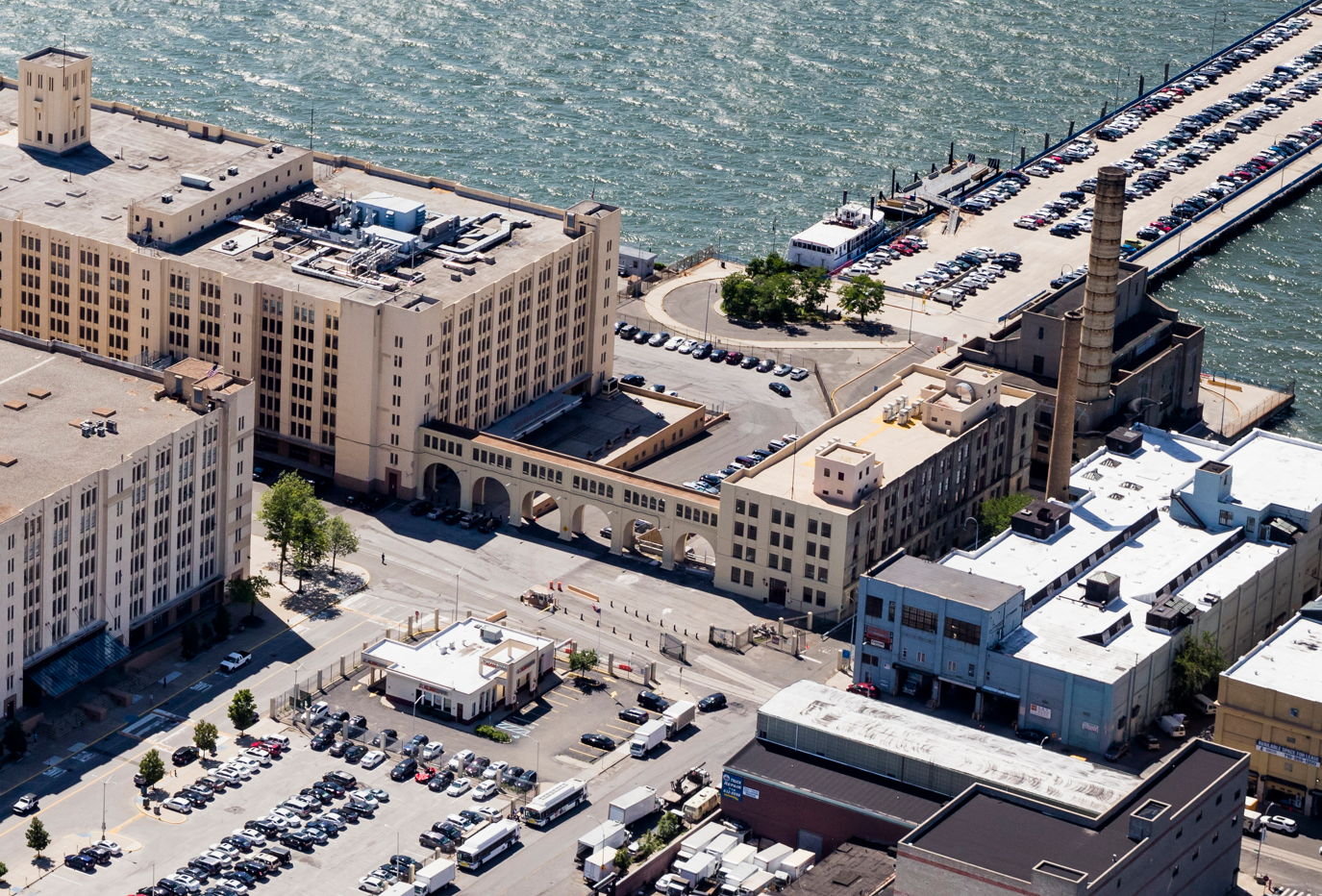
The Brooklyn Army Terminal—a 59-acre industrial campus on the Sunset Park waterfront—has served New York City's economy for over a century. Today, the campus is home to over 100 businesses and 4,000 jobs as the city's premier affordable hub for modern industrial businesses and entrepreneurs.
Managed by New York City Economic Development Corporation since 1986, the campus now plays a vital role in the city's transition to a green economy. Its four-million-square-foot footprint combines historic architecture with modern infrastructure, creating an ideal proving ground for climate technologies that must work in the complex reality of existing cities—not just new construction.
-
New York City is building its position as a global climate innovation hub grounded in local partnerships and investments. The City's commitment to decarbonization creates urgent demand for proven technologies that work in dense urban environments. Pilots at BAT accelerates the path from prototype to commercialization by giving innovators the infrastructure, connections, and visibility needed to commercialize solutions at a city scale. We are excited to partner with LACI to support and grow promising new technologies for communities.
-
Launched in September 2023 by NYCEDC, Pilots at BAT has initiated more than 15 pilot projects, fostering connections between startups, City agencies, technical experts, and community members. This network of supporting actors accelerates adoption of climate solutions while demonstrating how industrial campuses can serve as proving grounds for the technologies cities need to decarbonize.
The program serves as the flagship initiative activating BATWorks in anticipation of its full launch in 2028—a climate technology commercialization hub backed by NYCEDC, Cambridge Innovation Center, and Los Angeles Cleantech Incubator.
Built for This
BATWorks issues calls for applications twice per year. Projects are prioritized based on feasibility and anticipated industry impact.
During your pilot:
Demonstrations run for six months to one year
You must remove installed technology and restore the site to original condition at program end
Demonstrations are at no cost to NYCEDC; LACI and NYCEDC staff support site access and oversee installation and removal
You are responsible for liability insurance
LACI and NYCEDC reserve the right to terminate the program for any reason, at any time
Program Terms
For additional climate tech piloting opportunities, visit our Harbor Climate Collaborative partners at the Trust for Governors Island and the Brooklyn Navy Yard, as well as LACI's Incubation program in Los Angeles.